Living Room Interior Design: Ideas & Practical Tips by Agam Spaces
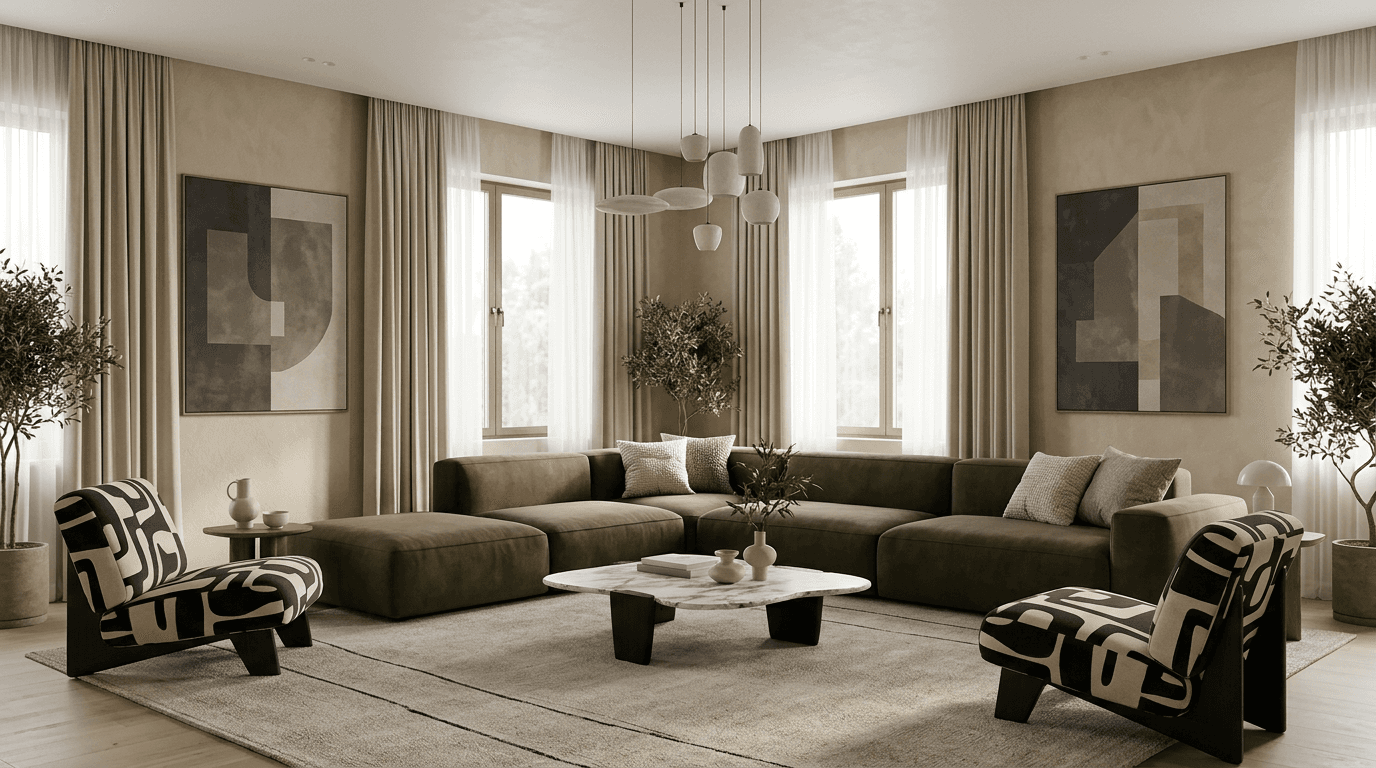
Living Room Interior Design: How to Create the Perfect Living Space
The living room is often the first space people experience when they enter your home. It is where family conversations happen, guests are welcomed, evenings slow down and everyday life takes place.
That is why good living room interior design is not only about making the space look beautiful. It is about creating a room that feels comfortable, works well and reflects the way you actually live.
From choosing the right layout and furniture to planning lighting, storage, colours and materials, every decision has a role.
What Makes a Good Living Room Interior Design?
A beautiful living room is not necessarily a functional one.
The best living room designs balance comfort, movement, storage and visual appeal.
Before selecting furniture or finishes, think about:
- How many people regularly use the room?
- Do you frequently entertain guests?
- Is the living room connected to the dining area?
- Where will the television be placed?
- How much storage do you need?
- Does the room receive natural light?
- Do you need space for children or elderly family members?
These answers help determine the right layout and design for your home.
Start With the Living Room Layout
The layout is the foundation of your living room.
Before buying a sofa or designing a TV unit, understand the available space and how people will move through it.
Keep Movement Comfortable
Avoid placing furniture in a way that blocks entrances, windows or frequently used pathways.
There should be enough space to comfortably walk between the sofa, TV unit, dining area and other parts of the home.
A simple layout often works better than filling every corner.
Create a Natural Focal Point
Every living room benefits from a visual anchor.
This could be:
- A TV unit
- A feature wall
- A large window
- Artwork
- A statement light
- A well designed sofa arrangement
Once you identify the focal point, the rest of the furniture can be planned around it.
Choose Living Room Furniture Based on Your Space
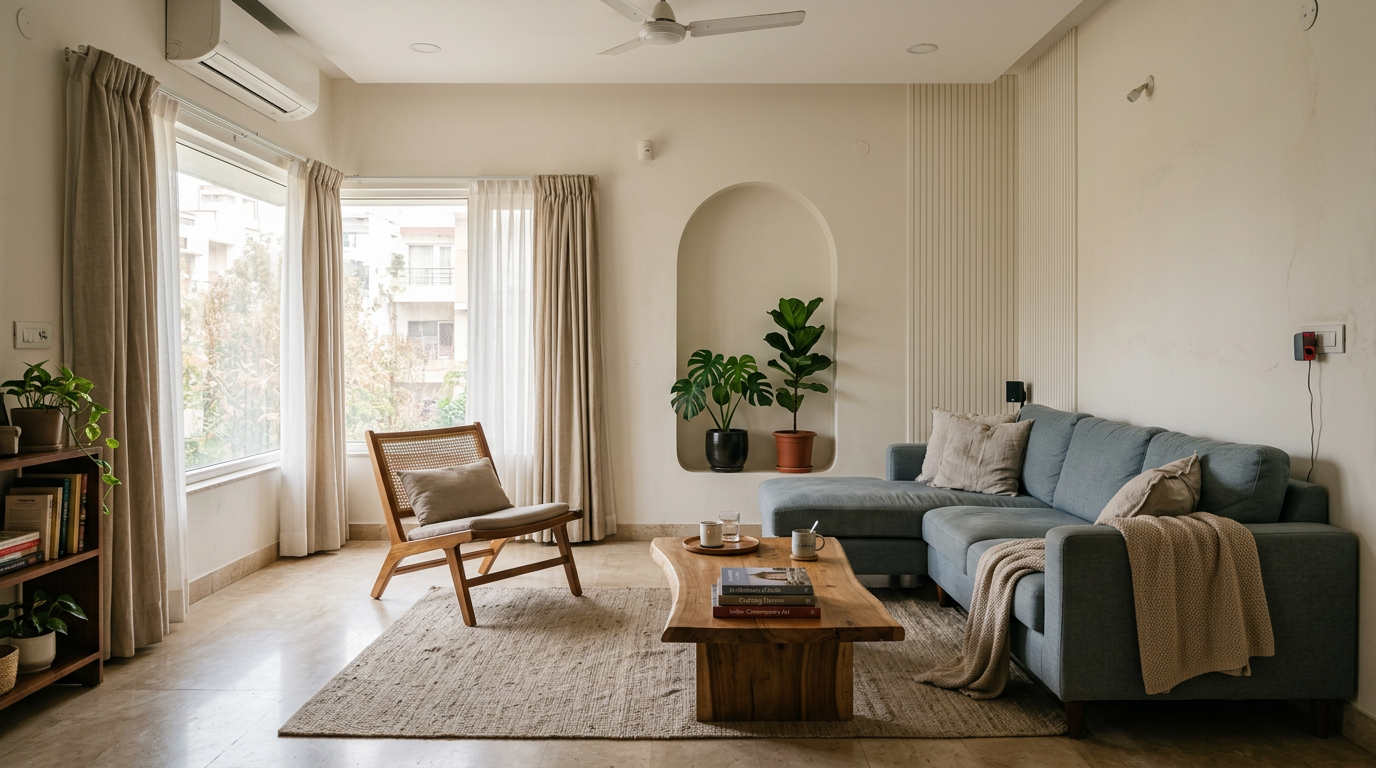
Furniture should fit the room, not the other way around.
For larger living rooms, you can consider:
- L-shaped sofas
- Sectional seating
- Accent chairs
- Centre tables
- Side tables
- Storage units
For smaller living rooms, choose furniture with a lighter visual appearance and avoid oversized pieces.
A compact sofa, nesting tables and wall mounted storage can help maintain an open feel.
Think About Everyday Comfort
A sofa may look impressive in a showroom, but your living room is where you will actually spend time.
Consider comfort, seating height, fabric maintenance and the number of people who regularly use the space.
For Indian homes, easy-to-clean and durable materials can be especially useful for everyday living.
Plan Your TV Unit as Part of the Interior
The TV unit is often one of the largest visual elements in a living room.
Instead of treating it as a separate piece of furniture, integrate it with the overall interior design.
You can combine:
- Closed storage
- Open shelves
- Display niches
- Back panels
- Decorative lighting
- Cable management
Keep the TV Wall Clean
Too many shelves, colours and decorative elements can make the wall feel busy.
A cleaner combination of storage and open space can create a more modern look while still giving you enough room to organise everyday items.
Make Storage Part of the Design
Storage is often overlooked when planning living room interiors.
But everyday items quickly find their way into the living room books, toys, electronics, documents, décor and more.
Well planned storage can keep these things organised without making the room look like a storage area.
Consider a Mix of Open and Closed Storage
Closed cabinets are useful for things you want hidden.
Open shelves can be used for:
- Books
- Plants
- Photographs
- Art
- Collectibles
- Decorative objects
The combination creates a balance between functionality and personality.
Use Lighting to Change the Feel of the Room
Lighting can completely change how a living room looks and feels.
Instead of depending on a single ceiling light, consider using different layers of lighting.
Ambient Lighting
This provides overall illumination for the room.
Task Lighting
Floor lamps or focused lights can support activities such as reading or working.
Accent Lighting
Accent lights can highlight artwork, shelves, textured walls or architectural features.
For a modern living room, concealed lighting and warm accent lights can add depth without overwhelming the space.
Create a Living Room That Reflects Your Style
The shades you choose play an important role in defining the look and feel of your living room. The right combination can make the space feel warm and welcoming, bright and spacious, or elegant and sophisticated.
When selecting shades for your living room, consider the size of the space, the amount of natural light, existing furniture, flooring, and the overall style you want to create.
Neutral tones such as beige, white, grey, cream and earthy shades can provide a versatile foundation, while deeper or brighter tones can add personality and visual interest.
You can introduce different tones and accents through:
- Accent walls
- Sofas and armchairs
- Cushions and curtains
- Rugs
- Artwork
- Decorative accessories
- Indoor plants
Match Your Living Room to Your Interior Style
The shades and combinations you choose should complement the overall design style of your home.
- Modern: White, grey, beige and subtle contrasting tones
- Minimalist: Soft neutrals and monochromatic combinations
- Contemporary: Neutral foundations with bold accents
- Warm & earthy: Terracotta, brown, olive, beige and natural wood tones
- Luxury: Deep green, navy, charcoal, cream and metallic accents
The goal is to create a balanced palette that complements your furniture, lighting and materials while reflecting the atmosphere and personality you want your living room to have.
Bring Natural Light Into the Living Room
Natural light can make a living room feel larger, brighter and more welcoming.
Where possible, avoid blocking windows with bulky furniture.
Use curtains that allow flexibility between privacy and daylight.
Glass partitions, mirrors and lighter finishes can also help distribute light through connected spaces.
For homes with limited natural light, carefully planned artificial lighting becomes even more important.
Choose Materials for Everyday Indian Homes
A living room should look good on the day it is completed and continue to work well years later.
When choosing materials, consider:
- Durability
- Maintenance
- Moisture resistance
- Scratch resistance
- Cleaning requirements
- Usage frequency
- Overall budget
The best material is not always the most expensive one. It is the one that fits your lifestyle and performs well in your home.
Add Personality Without Overcrowding the Space
Your living room should feel like your home, not a showroom.
Personal touches can come from:
- Family photographs
- Artwork
- Indoor plants
- Books
- Handcrafted décor
- Travel memories
- Statement furniture
The key is balance.
Leave some areas visually quiet so that the pieces you love actually stand out.
Living Room Interior Design Ideas for Indian Homes
Indian homes often need to accommodate several functions within the same space.
The living room may need to work as a:
Guest area + family space + entertainment zone + storage area + occasional workspace.
This makes planning particularly important.
For practical living room interiors, consider:
Flexible Seating
Choose seating that can accommodate both everyday family use and guests.
Smart Storage
Use wall mounted units, TV storage and concealed cabinets to reduce clutter.
Easy-Maintenance Finishes
Select finishes that can handle regular cleaning and everyday use.
Practical Lighting
Combine natural light with ambient and accent lighting for different times of the day.
Questions we're asked most.
Use light wall paint, hang curtains high near the ceiling, add mirrors to reflect light, and choose multi functional furniture.